

All That's Underfoot
The Unsexy Work That Makes Everything Else Possible

An image from an old campaign mailer, connecting my young life to my professional life.
Note: I’m traveling and wasn’t able to record today’s post personally. Feel free to press the play button and hear a human approximation of my text if you need it.
It’s my own fault.
Given the Trump Administration’s history with “infrastructure week,” I should have picked another topic.
But I really didn’t think the President would threaten Iran with genocide Tuesday morning to be followed up by proclaiming a “Golden Age for the Middle East“ just before midnight the same day.
And, following the previous pattern established by Trump’s posts on Truth Social, I’m sure some insiders made a lot of money in the stock market between Tuesday and Wednesday.
As of this morning, we are in a highly volatile, uncertain “ceasefire” as we all try to live our lives.
Assuming we have a functioning society, I’m heading out to a board meeting tomorrow for Accelerator for America.
That’s a much-needed break from this week’s absolute lunacy.
Accelerator is one of the best and most eclectic groups I’ve been part of, and I’m honored to join its board of directors.
What makes it special? It works with local elected officials, industry, and nonprofits to get things done in communities.
And, Accelerator is often focused on the systems that are unseen or undervalued, but make our lives better every day.
Although physical infrastructure wasn’t explicitly named in FDR’s second bill of rights, it was, true to brand, underneath and supporting his call for economic potential.
FDR’s Big Investments
Coming into this topic, beyond the Trumpian risks, I was concerned about how I’d loop in FDR in this edition of my series on an updated Economic Bill of Rights.
Infrastructure wasn’t explicitly articulated in his second inaugural.
Yet, none of the economic rights FDR envisioned – decent homes, health care, good jobs – can be delivered without it.
My view is that FDR saw infrastructure in a similar way to what Deb Chachra passionately argues, in her book How Infrastructure Works, is a fully integrated structure that keeps everything moving forward.
It wasn’t omitted in FDR’s speech. He took it for granted that it was embedded within.
That’s why it was such a key part of his New Deal from the very beginning.
He started the Works Progress Administration (WPA) in 1935. By the time it was folded into the war effort in 1943, it was the largest New Deal Agency, spending nearly $11 Billion (roughly $208 billion in today’s dollars).
It employed 8.5 million people across those years, offering decent-paying jobs rather than just people on public assistance.
What did America get out of it? More than 4,000 new school buildings, 130 hospitals, 29,000 bridges, 150 airports, and 280,000 miles of paved roadways.
It was messy, to be honest. That much money flowing in so quickly meant patronage and grift. It also excluded Black people from most of the offerings, setting up the kind of wealth gap I’ve written about multiple times.
Yet it’s undeniable that it set a precedent for future legislation aimed at meeting our country’s infrastructure needs.
Truman tried to build on the success, but had more limited room to maneuver due to an unfriendly Congress and the many post-war demands.
But he still oversaw increased highway safety and a mostly privately financed suburban housing expansion.
It took Eisenhower’s war experience to bring the need for an Interstate Highway System to America. He framed it as a major defense and safety need. But it drove economic development, for good and bad, toward modern suburbia.
The investment was $25 billion in federal funding (more than $300 Billion today). It was by far the largest public works project in America.
Eisenhower also took on the task of modernizing air travel to meet the growing demand.
Kennedy built on both of those in his short time in office, and Johnson expanded urban mass transit as part of his focus on poverty alleviation.
Successive presidencies focused on specific areas of infrastructure.
Nixon built the Environmental Protection Agency (EPA), leading to big investments in wastewater treatment, and doubled down on public transit, including the development of the DC Metro.
Carter pushed for energy conservation and water safety; Reagan focused on highway maintenance and encouraged the private sector to get more involved in spending.
Then the presidents shifted to the technological infrastructures needed to support the emerging internet economies.
Meanwhile, the public was continually notified of our deteriorating physical infrastructure, and cities and counties were scrambling to keep up with EPA judgments mandating (without funding) water and wastewater upgrades.
Public transit across the nation faltered with lower ridership and a lack of investment, leading to a worse experience for those who did ride.
Trump, in his first term, had an “infrastructure week” scheduled, which seemed to be every week of his presidency, only to get bumped by some scandal.
It wasn’t until Joe Biden that the country passed the largest and shockingly bipartisan infrastructure bill.
Called the Infrastructure Investment and Jobs Act, it was signed in November 2021 and allocated $1.2 trillion over five years to roads, bridges, rail, public transit, broadband expansion, clean water, and electric vehicle infrastructure.
So, with that, infrastructure is solved, right? Right?
Yeah, no.
We’ve got a lot of work to do. And I’ll get to that. But first, a little personal history with me and this topic.
Getting Out of the Sewage
My dad was deep into infrastructure. I mean literally.
He started as a laborer and machine operator who worked in, well, shit.
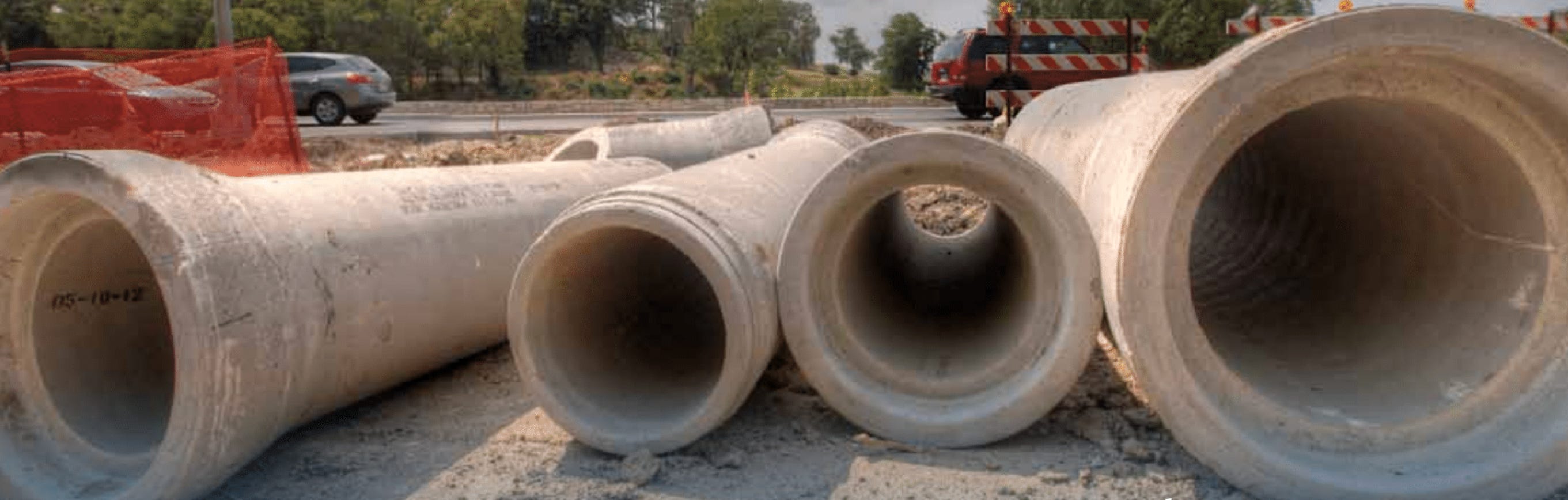
Not shit, exactly, but all the underground pipes that moved it.
And also at some “innovative” wastewater treatment plants, which I can’t imagine would be legal today.
I was with him on a lot of those jobs as a kid.
I don’t think I ever ran into an OSHA agent while I was helping operate the machines as a second- and third-grader.
Needless to say, my dad wanted me to get away from that work. I went to college and entered a more “white-collar” profession.
Only to find that being in politics brought me right back to sewers, and not in a metaphorical way.
Problem
My political business operated prior to the IIJA’s implementation.
So many campaigns I worked on across the nation were either directly related to passing bond measures to support infrastructure or local elected officials who had to deal with the potholes, flooding, and broken public transit.
And despite how much money we passed, how committed the elected official was to get the repairs done, it was never ever enough.
The backlog of work, deferred maintenance, and skyrocketing material costs made it impossible to keep up.
And even with the massive IIJA investment set to run out this year, recent reports indicate that most states and localities allocated the largest share to highway construction and maintenance.
Given our car-reliant culture across the country, that makes sense.
But it neglects the kind of forward-looking investments we’ll need to make not only for roads and bridges, but also for non-car transportation, keeping our water safe and waste contained, and our electric and internet infrastructure safe.
Deferred maintenance is huge, the money is running out federally and in the states, and our politics is toxic.
None of that is an excuse to stand still. We simply can’t.
Shared Value
Americans need a fully integrated, functioning infrastructure that ensures safe, high-quality air and land transit, safe drinking water, and consistently reliable access to energy and technology.
Solutions
This stuff isn’t fun for most to talk about. I get it.
One night early in our marriage, we were returning to the home we recently purchased with no idea what we were doing.
My wife turned to me and asked, “Did you leave the attic light on?” I apologized that I did.
But then she pointed out that we were standing on the street corner; she could see it through the sag in our roofline.
We quickly learned what “eaves” were and how expensive it would be to replace something no one would ever see on the house.
Similarly, when helping a mayor in KC, we often heard that we ignored the East Side. This was after the city spent $50 million to alleviate flooding.
Turns out people only noticed when their basements were flooding, not when they were dry.
Given the daily chaos we’re encountering, I know many readers want me to provide the big, exciting solutions.
But the reality is that we need to fix the eaves. We need to keep the basements dry.
That’s a combination of less visible short-term items and more interesting long-term approaches.
In the short term, we need to pull the levers to make things work better.
I would get so frustrated after working to get a bond passed to fix and resurface roads, only to see that clean and smooth road torn up by the separate gas company, which would rip up a section to replace a line.
Initiatives like Bloomberg Philanthropy’s Government Innovation and, obviously, Accelerator for America are working directly with cities on more coordination so that kind of thing doesn’t happen.
But these systems are calcified in most of our local governments. Some cities, like Columbus and Denver, have made progress and require utility coordination before road resurfacing. This simple policy saves millions.
Getting better coordination of resources, planning investments beyond roads and bridges, and innovation in materials that last longer will take a ton of work.
Yes, the IIJA money is running out this year, but we should maximize the leverage we have to break down internal systems that prevent the short-term fixes we need to prepare for our future.
In addition, we can improve financing in the near term.
Yes, that means exploring all options, such as a sovereign wealth fund. We are the only resource-rich country without one.
I’ll admit that I’m highly skeptical, even if Trump didn’t propose it. I don’t see how our current debt load and politics set up something for success.
More realistically, we need to continue to triple down on the financing mechanisms underway.
These include things that aren’t widely understood by the public. In fact, they generally get attention only when misused rather than used productively.
Like land value capture (Tax Increment Financing), public-private partnerships (P3S), green bonds, and asset recycling, where governments lease or sell existing assets to private entities, and the upfront cash to invest in new projects.
Critics love to point out, rightfully in many cases, the abuses by developers and corporations that steer public benefit toward private gain.
Still, these tools can be highly effective when used properly. That’s also where groups like Accelerator for America can provide the technical expertise to ensure that states and localities secure the most favorable terms for the public.
The sexy part of infrastructure, though, is how we think about the future needs.
It’ll take time, but I believe we need to move closer to what Chachra advocates for with infrastructure, an ultrastructure that pulls many of the systems together from electricity, water and wastewater, fuel, transportation, telecommunications, supply chains for goods, and systems for solid waste removal.
She advocates for smaller-scale, resilient systems that aren’t centered around combustion energy.
It’s a massive undertaking to decarbonize what we have and to think about more regional hubs vs. large-scale, but vulnerable infrastructure.
This kind of ultrastructure can help us as we navigate the effects of climate change, with natural disasters becoming more unpredictable, cyber and physical attacks, energy-intensive demands of AI and data centers, population shifts, and even the challenges posed by war and pandemics.
What would that look like? Regions and states would work to maximize their natural assets, such as wind power in Kansas or hydropower along the coast.
Regions will need to invest in technologies to improve storage efficiency and maintain high system resilience in case something fails.
Transportation infrastructure would also need to evolve for how people work and live differently, as commuting to a central business district becomes less central to daily life.
But perhaps most challenging, a change in governance and funding would be necessary, with greater cooperation between private and public partners across domains.
Clearly, this isn’t an easy venture. And I’m not going to get into the details of her recommendations, some of which I think are politically untenable.
But the basic concept is something to build on, and once the structure is in place, it will be easier to move money to where future needs demand.
For example, instead of looking at highways, airports, and rail as separate types of transportation, we’re looking at how we move people efficiently and effectively. Much like how engineers in ancient times figured out how to move water, not just for drinking but for agriculture and cleaning.
There’s no reason to wait. Organizations like regional councils have some of these mechanisms in place, but they generally lack deep involvement from the private sector. If we could pilot a few regions and then expand to more, we’ll learn how to operate better. First mover regions will have a competitive advantage in managing resource allocation effectively.
With self-driving vehicles already on our roads and gas-reliant cars giving way to new technologies (despite the hostility displayed by the current administration), we need to be planning for a world beyond road widening and resurfacing.
Check out Accelerator for America’s Innovative Infrastructure Initiative (I3) for some projects already underway that point to a different future for all of US.
If we can get our act together as a nation with this approach, perhaps we can begin to repair our international standing by sharing what we learn.
Early in her book, Chachra writes, “My life, as I know it, has mostly been made possible because I had the sheer blind luck of being born into a time and place where my survival needs were met and continue to be met every day by shared infrastructure. What might our world be like if access to these systems were universal?”
I think that’s an amazing question for us to ask about our nation and our world as we seek to enter a period of healing after this administration runs its chaotic course.
Coming up on B Positive
I may change gears next week depending on what I learn during the Accelerator conference. It’s an incredible agenda spanning infrastructure, housing, and workforce issues. All relevant to the economics series.
Regardless, in the near future, I’ll highlight issues affecting our youngest and aging populations.
Beyond that, my topics will follow up on the “That’s America, Jack“ promise: evolving education, a more collaborative civic society, improved government services, and what we need to do, block by block, in our communities to reestablish America’s potential.
Reading Recommendations
I read a lot to learn a lot.
Given this week’s topic, I pulled How Infrastructure Works off the shelf and gave it another read. I just touched on a few key themes in this post, but it goes a lot deeper into the systems analysis and uses effective storytelling to keep it grounded and not an abstract thought experiment.
Ok, I’m going to revisit a recommendation given the big ideas in this post. It details some projects that were clearly frustrating in my life (hello, Big Dig in Boston). But it’s worth flipping through - How Big Things Get Done.
I’ve said it before, and I’ll say it again - building the plane while flying never, ever works.
If you have 10 Minutes...
There’s a reason why I was hyping local elections last week.
Most of the issues I write about may have national policy components, but all get implemented at a local level.
We simply don’t pay enough attention to state, county, city, and school board elections.
I’m happy to report that the local elections in my neck of the woods went our way, beating back one specific church that likes to put “godly” people on our public school board to undermine public schools.
More elections will hit this summer before the big midterm in the fall.
I also recognize that most of my readers are already engaged. That’s by intention in how I write and where the algorithms point.
At the same time, I think we lose focus a bit and give up on the people who are not tracking politics closely, but are disgusted by what they read or hear about each day.
I know I’m guilty of overlooking and undervaluing people who are focused on their lives but maybe not engaged civically.
So do one thing this week with one other person. Share with them the resource I recommended last week, vote411.org.
Give a hand to someone who wants to take a step. It may make all the difference this fall and beyond.
Very interesting read.