

America Will Be
Juneteenth Reflections: 250 Years In, Still Fighting for the Promise

So much was written about the destruction of the south lawn of the White House, complete with lame ass UFC fighting for our trying too hard to be young, our oldest President ever at 80.
Sad, really. The fighters were treated like gods, with our military forced to bow to them, our People’s House used as a locker room, and forever tarnished by the spectacle.
I’m not going to give any more space to the disgraced “fighter” who had to show how low he can go, other than to say you don’t have the class or brain to be within a hundred feet of Michelle Obama.
Then there were a few days of a new “deal” with Iran. I’m still trying to figure out how we spent billions, lives lost, to make things less safe and cost us potentially billions more. Quite a “deal” signed at Versailles. Let’s hope it goes better than the last treaty signed there.
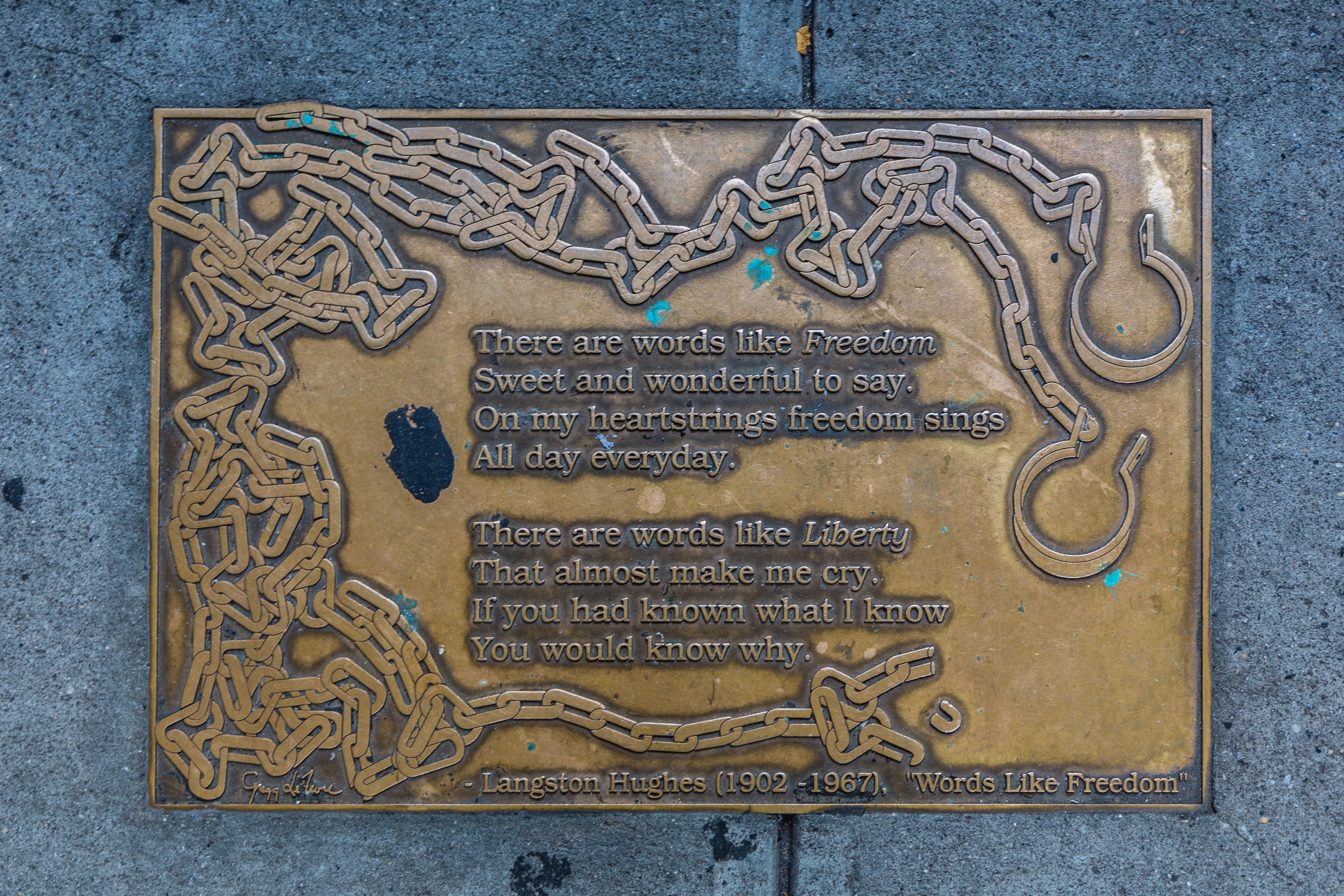
And today, we mark the utter ignorance of our administration with its hostility toward Juneteenth because according to them, we have too many holidays.
For the past couple of decades, Juneteenth has marked the start of a reflective period for me that ends on July 4. I take it as an annual marker to check in on America’s progress and how far we need to go.
This year, I’ve obviously ramped that up with my series on the nation’s 250th Celebrations.
With this post, I want to focus on our path toward equality.
We’ve regressed so much socially since the golden escalator, and our economic inequality has accelerated.
But things aren’t hopeless yet.
A Few Minutes of History and Philosophy
As I’ve written, FDR had serious faults. As president, he compromised on key policies because he didn’t want to lose the racist South, interned Japanese, and didn’t act early when evidence of the Jewish Holocaust was overwhelming.
But, from my perspective, his failings must be counterbalanced with a country ready to be ripped apart by the Great Depression and then World War II.
And, we should provide some partial credit for his evolution as war and economic conditions improved.
I’ve focused repeatedly on his 1944 State of the Union address, with Economic Bill of Rights, because it serves as a jumping-off point for us to get back to basics and push toward giving everyone the chance for economic stability and growth. His thinking included:
Good-paying jobs that provided for food, clothing, and recreation
Fair competition for businesses of every size
A decent home for every family
Quality medical care
Protection against economic hardships
A good education.
FDR argued, “Necessitous men are not free men.” And, unlike his earlier work, these rights should be “established for all regardless of station, race, or creed.”
To get there, we need to understand what we’re up against in our American makeup. I’ve summed up that tension as hyper-individualism versus a community-good mindset.
For those who have been close readers, you know I have referenced the work of Elizabeth Anderson, a philosopher from the University of Michigan, who has been working to redefine the community-versus-individual tension.
She’s created an update to John Dewey’s work and the pragmatist school and there’s a very New Yorker (meaning long) article that sums up her approach.
For those who don’t have the time for New Yorker sprawl, here’s a quick summary of her thinking:
To be truly free, in Anderson’s assessment, members of a society need to be able to function as human beings (requiring food, shelter, medical care), to participate in production (education, fair-value pay, entrepreneurial opportunity), to execute their role as citizens (freedom to speak and to vote), and to move through civil society (parks, restaurants, workplaces, markets, and all the rest).
Anderson’s model shifts egalitarianism from ideas such as redistributing wealth to applying the market tools more broadly, without barriers, and with dignity and respect.
The approach does not ignore racialized inequities and their history; rather, it situates them within a framework that uses both public policy and personal practice to account for differing starting points.
The issues became vivid to her when she moved to the Detroit area, which was, and still is, segregated by race. She looked at one place, and a real-estate agent told her not to worry, because locals were “holding the line against blacks at 10 Mile Road.”
Anderson found that race not only limited the choices of Black people but also her own choices. Freedom was lost all around.
Her primary point across her studies, equality is the basis for a free society. And I bring her up a lot because her decades of study suggest that a market-based society is likely our best hope for a pluralistic, multiracial, multicultural society.
But the key suggestion she has is that market-based economics must be adapted to support equality, policies adjusted, and humanity considered for any society to be considered free.
So how are we doing?
Where We Are
We’re not doing great. According to many economists, wealth inequality has exceeded that of the Gilded Age.
And those who have the most wealth now are intent on stirring and platforming the most racist and vile thoughts from Musk and his Replacement Theory, to Zuckerberg sponsoring the UFC’s hateful display.
And according to the Wall Street Journal, people across the spectrum are so sour on the economy because there’s a record divide between corporate profits and worker pay.
With all of that, the wealth gap between white and Black Americans is now accelerating again after a couple of years of promise when we were getting economic gains across demographics, rising post-COVID.
It’s not just our Black and Brown Americans. Rural voters are told they are in a Golden Age, while the combination of tariffs, trade wars, inflation, and the Administration’s war on renewable forms of energy takes a toll.
Where We Need to Go
The answer, as I’ve suggested throughout my writing, is to stop pitting groups against each other and recognize that far too many of us are being played by those with money and power.
We need to build bridges and break down market barriers that exist across demographics.
For reasons similar to Anderson, I’m a big fan of Heather McGhee’s Sum of Us. She creates a compelling case that the race-based policies of the past and present hurt the intended target, but also hurt poor white people, the very aggrieved people from my hometown.
Since our government has given up on it, we need Foundations to take a zip-code-by-zip-code look at significant discrepancies across demographics in achievement across key indicators of good-paying jobs, housing, medical care, education, and financial stability.
And then what? Foundations need to use their collective spending muscle to pull corporations to the table and work to break down the market barriers that prevent people in those zip codes from achieving success.
Almost all of B Positive is about these policies. So I’m not going to repeat them directly. And the Roosevelt Institute also just published a strong, far-ranging report that hits territory I’ve covered, titled The Good Life Agenda. Check it out.
But I do want to point out two critical things as we move forward.
1) Focusing on specific economic outcomes will help predominantly Black and Brown people, such as providing access to funding to start businesses.
But, guess what? Such activities would also open up opportunities in other underserved areas, like our rural and small towns.
2) We need to craft these policies and interventions differently from the past. Not just a few people sitting in a room cooking up ideas for the “others.” But at the same time, we should not place all the onus on the poor to come up with all the solutions to their own problems.
In these times, I think of The Alternative: Most of what you believe about poverty is wrong by Mauricio Miller. He worked for decades in poverty programs, even recognized by then-President Bill Clinton, before questioning the whole model.
This quote, in particular, stuck with me: “Privilege frees people to dream, and the strong social networks available to the privileged allow them to make their dreams a reality.”
Much like the author, I went to college with only one goal: to get a job. Yet the systems, especially the social network, embedded in my college allowed me to use my privilege to shift from survival to dreaming and realization.
How do we remove barriers so more people can succeed? Per Miller, “Seeing people as contributors and investing in their initiative by banks, philanthropists, businesses, and government is what can grow our economy and close the income and wealth gap. Our society provides that for the rich.”
How can we learn from the past more effectively? “Today’s righteous projects, after all, will inevitably seem fatuous and blinkered from the vantage of another age.”
Miller references an “encouraging environment.” It’s nuanced and in line with Anderson’s pragmatism.
He’s trying to find a pathway that bridges the community-versus-individual tension in a more productive way by placing greater emphasis on social networks closer to communities rather than large top-down programs.
That kind of listening, to communities rather than program leads, is something I’ve written about before, but it needs repeating.
Deep listening is where the real work begins.
On a personal note, please take some time to rest and reflect over the next couple of weeks.
Our America is turning 250. Many of us don’t feel like celebrating. I don’t.
But I am going to keep planning, fighting, and working to bring the American promise to life for more of us.
I hope you’ll join me.
Reading Recommendations
I read a lot to learn a lot.
I’m checking out Penguin’s Reading List for Juneteenth. It’s got several I’ve read and recommended in the past, including James by Percival Everett.
But I’m going to revisit a couple I haven’t read in a few years: Toni Morrison’s A Mercy, and James Baldwin’s The Fire Next Time. Baldwin may only take an hour to read, but it takes a lifetime to learn the lessons within it. And Morrison’s should serve to reawaken the conversation about slavery that some would like us to forget.
Finally, if you haven’t read it, I suggest you pick up my friend Ebony Reed’s Fifteen Cents on the Dollar. It gives the human side to the Black-white wealth gap history.
If you have 10 Minutes...
Read all of Langston Hughes’ Let America Be America Again
It was written in 1936, but its words are still, unfortunately, resonating today.
Let America be the dream the dreamers dreamed—
Let it be that great strong land of love
Where never kings connive nor tyrants scheme
That any man be crushed by one above.
(It never was America to me.)