

Deja Vu All Over Again
The Economic Rigging Setting Up the Next Crash

Last night, the president went through his usual litany of lies about the 2020 elections, adding a few allegations so easily debunked that CBS cut away to do it on the spot.
Beyond the lies, the frustrating part for me is that we should be focusing on foreign influence in our elections. Namely, bad foreign actors are funneling money and using bots to stir up more divisive politics.
Instead, our head guy helps pour gasoline on what Putin, China, and others are sparking.
What a way to celebrate our 250th birthday year.
With many primary elections coming up in the next few weeks, we’re rightfully focused on the administration’s actions to prevent people from easily accessing the vote.
Beyond his falsehoods on live TV last night, Trump’s firing of two Democratic members of the independent Election Assistance Commission, while accepting the resignation of the final Republican member, weakens our ability to monitor for domestic or foreign interference.
It’s one of the many bright flashing red lights that warn us about Trump and his wealthy supporters’ desire to dismantle our rights so they can enrich themselves.
It’s alarming and frightening. And many people will rightfully focus on it for the days to come.
But today, I want to focus on another rigging that’s going on under the surface.
I know that most people don’t have time to read in-depth policy analysis or even listen to a long interview on the topic.
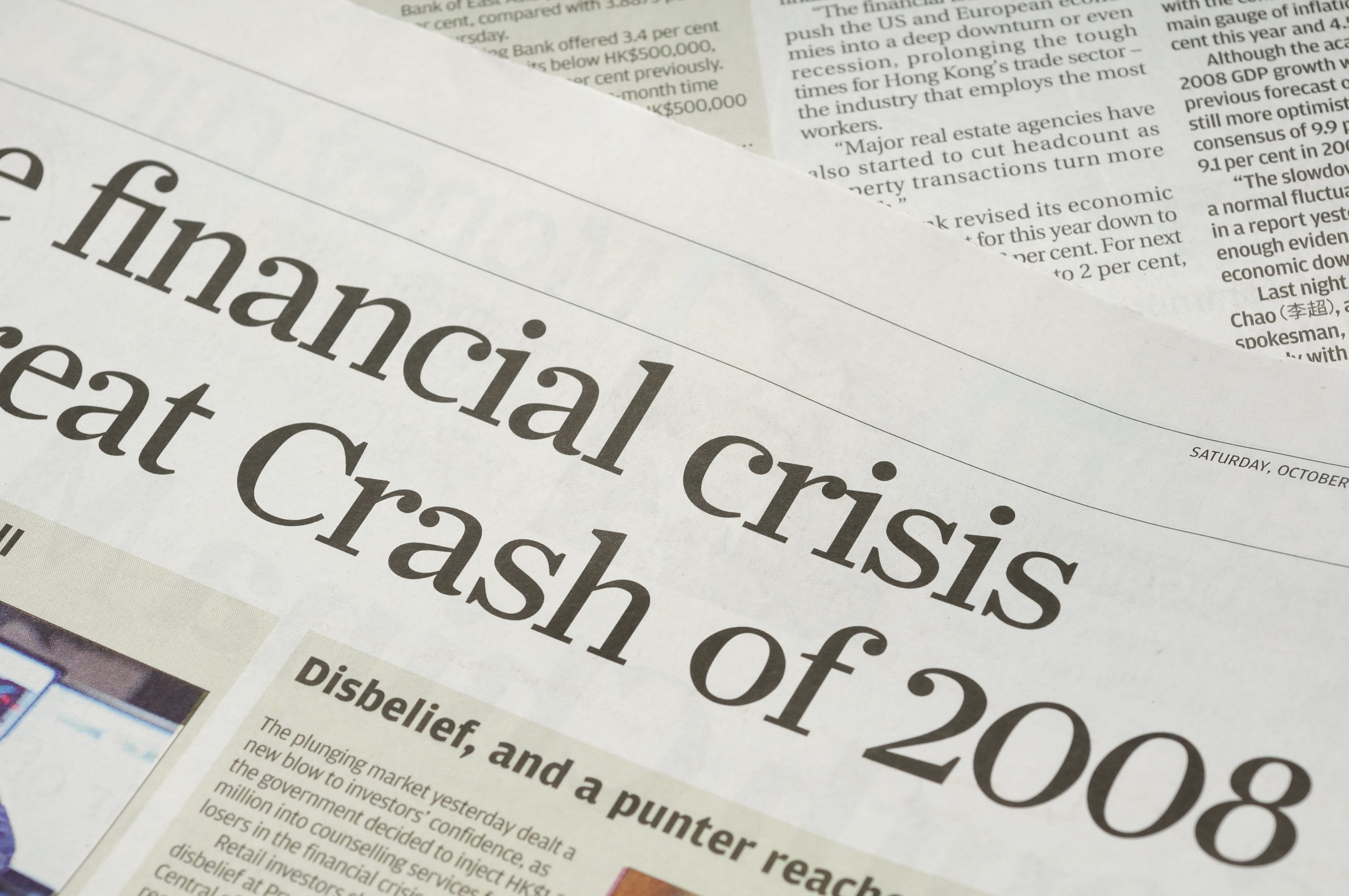
So, with that in mind, today’s post is a distillation of what the administration is up to that will unwind much of our economic oversight capabilities and put us in a position for another economic crisis similar to 2008.
But first, let’s take a quick look back.
60 Seconds of History
FDR’s first inaugural address, yeah, the “Only thing you have to fear...” speech mentioned banks exactly twice to talk about greed and the necessity of oversight.
Significant bank runs, where people try to withdraw their cash quickly, had hit the country over the previous couple of years and were accelerating.
So much so that, only a few days after his inauguration, FDR called for a “Bank Holiday,” closing banks nationwide temporarily.
He spoke directly to the American people about this decision and the steps forward on March 12. It was his very first fireside chat, underlining the importance to all Americans.
FDR spoke in simple terms about the government’s actions to generate confidence in the banks. But to me, a paragraph toward the end set up not only his immediate focus, but put in motion a system that would solidify financial institutions and how people worked with them up until the 1990s.
We had a bad banking situation. Some of our bankers had shown themselves either incompetent or dishonest in their handling of the people’s funds. They had used the money entrusted to them in speculations and unwise loans... It was the Government’s job to straighten out this situation and do it as quickly as possible. And the job is being performed.
The legislation, regulations, and monitoring bodies that emerged from that “job being performed” were durable and helped us grow and manage the world’s largest economy.
However, it was also under attack from its inception by those who wanted to operate without restriction. When we hit an economic rut in the 1970s, conservatives pushed to deregulate industries, including the financial.
By 1999, Clinton signed the Gramm-Leach-Bliley Act, a bill that passed with overwhelming bipartisan support (the final bill passed 90-8 in the Senate).
It reversed the 1933 Glass-Steagall barrier on separating commercial banking (check/savings) from investment banking.
On the surface, there were many good reasons to do it. But it led to mega-mergers and riskier behavior to maximize profits.
Many economists point to that kind of behavior that led to products, namely derivatives of bad mortgages, that drove the 2008 economic crisis.
So what does that have to do with Trump and today?
The Wild West Again
One of the long interviews I read, so you don’t have to, was published on Paul Krugman’s Substack page last weekend with Dennis Kelleher, a former Senate staffer and founder of Better Markets, a DC nonprofit working for economic security.
Let me boil down a few of the key points.
This November, we’ll have voters who weren’t alive during the 2008 crisis. They don’t remember how bad it was or that we didn’t emerge from it as an economy until 2017.
We lost a generation of talent and gained a Trump regime. How? According to the Fed in 2018, 90% of Americans were poorer in 2016 than 2007 by a factor of 17 to 35 percent.
A big reason for the 2008 crisis was the accumulated deregulations and lack of oversight that led to a lot of greed, bad deals, and products that got some rich very quickly while eroding the core infrastructure of banking and finance.
Some of that regulation and oversight was reinstated after the collapse. But in Trump’s first term, and now even more in his second, his minions are working to make us look back fondly on the time before 2008.
We have moved to consolidate wealth at the top in a way we haven’t before. Including 401(k)s, only about 10% of Americans are invested in the stock market. And within that 10%, most of the money is at the very top. The bottom 50% of Americans, roughly 165 million, have only 2.5% of the country’s wealth.
Kelleher recommends a couple of books that detail the philosophical divide that drives this - there are simply many in power with money who believe that they are better than the rest.
Therefore, what benefits them is right. I see this sentiment pop up in my own feeds when old friends (who are in much less advantaged financial situations) ask me why I want to “punish success.”
And what benefits the ultra-wealthy is the decimation of oversight and monitoring, and the undermining of the structures created for a fair playing field. It’s making it more difficult for people who grew up like I did to get to the position I’m in today. Resentment feeds resentment there.
There are a ton of examples in the Krugman/Kelleher interview of what’s being done, but the basic point is that many Trump loyalists are now in positions at independent agencies (including the Federal Reserve) and are focused on profit-maximizing rather than public protection.
As I was speaking with a friend over the 4th, the recent Supreme Court decision in Trump v. Slaughter eliminated the longstanding protection that prevented presidents from firing independent agency commissioners without cause.
That opens the door for Trump (and future Presidents) to populate agencies with acronyms most don’t understand, but that wield significant power, to bend to the whims of the Oval Office.
The lack of any coherent approach to managing crypto is perhaps the easiest thing to get your head around. Very few make money there at the expense of the many.
According to Better Markets, Crypto has been around for 18 years, and there’s no legitimate use case. The only real uses are tax evasion, money laundering, and crime. And it seems like the administration wants more of all that for its cronies.
It’s not too late to strike the right balance. We don’t need a government that kills innovation and success through over-regulation, but we also can’t take another dismantling of protections.
What Can We Do?
My son says my writing can get repetitive at times. I agree.
That’s because this stuff may be common sense, but people like Steve Bannon et al. have been trying to change common sense for the past ten years. And that means I need to repeat things.
First and foremost, we need to elect people who aren’t in the Trump tank in 2026 and 2028. I don’t know if we’ve sunk enough to break the Trump fever, but we need to push.
But, as I’ve said, winning isn’t enough. That’s why we need to unrig this system and fast.
I wrote about potential Constitutional Amendments and legislation that are necessary if we want a better course toward a multicultural, multiracial, and prosperous democracy.
And, of course, if you flip back through my 250th Anniversary series, you’ll get more detail on the economy, health care, education, and even elder and child care.
Yet, all of that won’t happen unless we elect people who are focused on using the power of their office to help more people, not just themselves.
Reading Recommendations
I read a lot to learn a lot.
If you want to go deeper into today’s topic, I highly recommend (as did Dennis Kelleher) David Leonhardt’s “Ours Was the Shining Future.” In it, he traces the opposing forces in our form of capitalism: one that focuses on doing better, and the other that focuses on rewarding the wealthy. It’s a clear-eyed view of where we are at.
You can also poke around Better Markets’ website for a thorough analysis and reporting.
And, on a different note, read this heartbreaking take about ICE’s killing of Joan Sebastián Guerrero. Typically, Felippe’s posts are full of satire and comedy, what you’d expect from a former Colbert writer. This one challenges us to be much better humans and to speak up.
If you have 10 Minutes...
No excuse, absentee voting starts in Missouri next week. It’s an example of what Trump wants to get rid of. What people who follow him call “rigging” the vote.
Why? Because it makes it easier to vote for people who have to work on Election Day, or are traveling, or simply need more time. And many of those people don’t like him.
I’m hoping that many of you show up and ask two friends to do the same.
In Missouri, our legislature pushed two crazy ideas.
The first is the idea to eliminate Missouri’s petition process by requiring that every initiative on the ballot pass by a majority in each congressional district. That means a crazy small number of voters could thwart what an overwhelming majority of the state wants. VOTE NO on Amendment 4.
The second crazy idea is to eliminate 2/3 of our revenue through repealing the income tax. No other state has tried to make up that much of a gap. The only way to do it is a huge increase in sales tax and, at the local level, property taxes. And we’re bordered by states with low sales taxes. We’ll just drive 5 minutes to Kansas for everything. Guess who’s going to hurt the most? It’s not people like me. VOTE NO on Amendment 5.
And if you don’t live in Missouri? There are 13 primaries and 1 runoff in August. Take the time to understand your ballot measures and vote in the primary.
Keep on being repetitive.