

The Lead Dad Years
Two Years, Two Diagnoses, One New Playbook

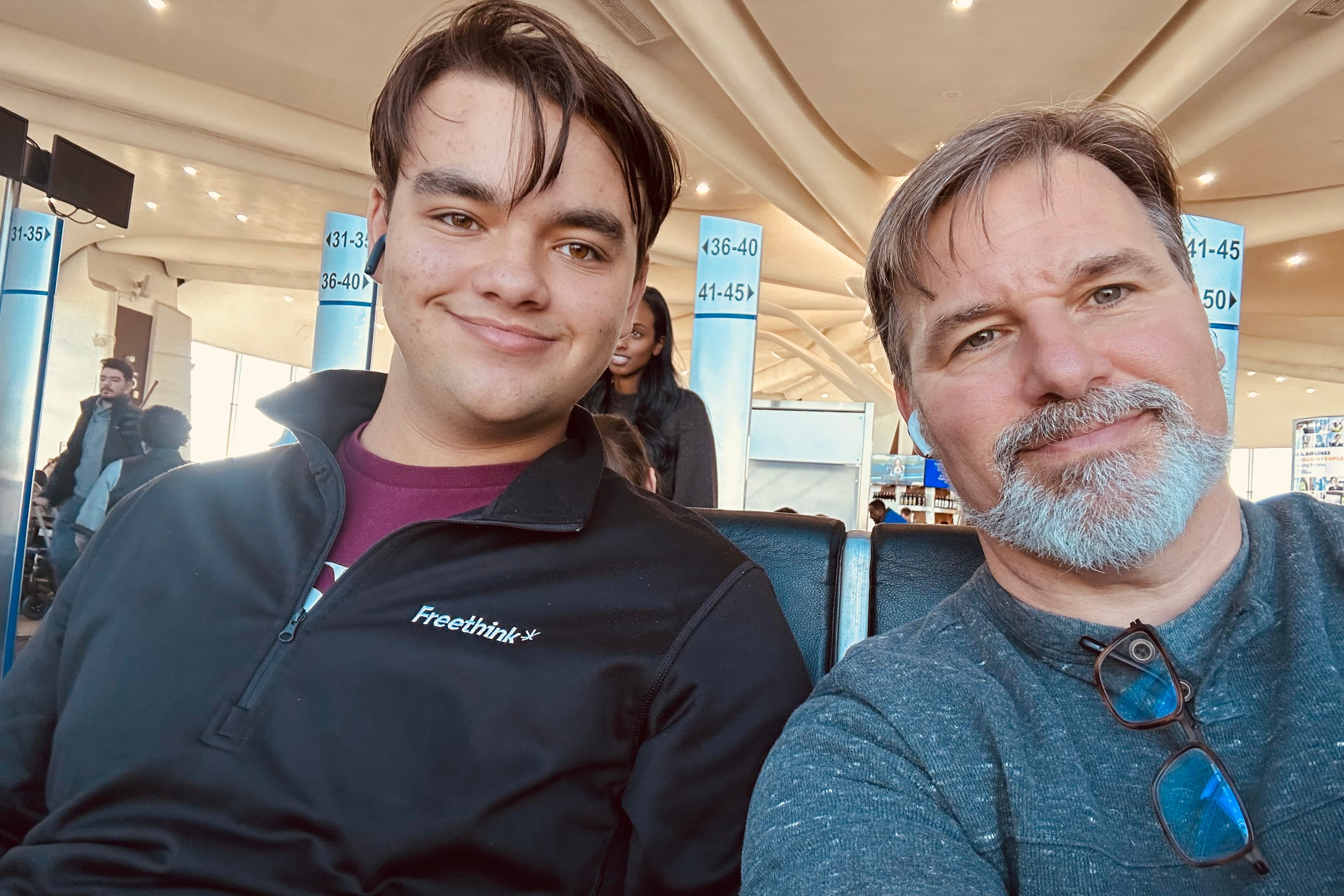
Two years ago, I left a major foundation's leadership team and took on a new job title: Lead Dad.
Within three months, my teenage son collapsed in adrenal failure.
Of course, there was more to the story.
Family First Isn't Optional
My announcement posts were professional and light on detail. The reality was that our family was struggling.
Our oldest had been sick for a year, and we couldn't figure out what was happening. Just when we thought we did, the symptoms returned.
Meanwhile, my youngest was having trouble, not academically or socially, because a lot was going on for a preteen. They are very private, and I'll leave it at that.
My son, however, has told his story and is okay with us sharing it.
Becoming The Lead Dad
Going into my announcement, I was struggling with what to call it.
We were fortunate that I didn't need to take a paycheck. Given my personality, any payment would have turned into a full-time gig or more, even a bit of consulting work.
So, I focused on being a dad first and providing whatever help I could to volunteer in the community.
One civic volunteer effort was focused on a plan for the next iteration of the Kansas City regional economy. Every mayor I've worked with, for, or against has struggled to articulate the economic strategy for KC, especially now in a time of consolidation and our lack of corporate headquarters.
The second is with Accelerator for America, which brings together an eclectic collection of cross-sector leaders with Mayors from across the country to test things and figure out what works through a series of playbooks.
So, what is that? Retirement? Sabbatical? Civic volunteer? A CEO friend introduced me to her husband at an event as "Larry, a new house-husband."
None of those labels fit. So, how do I think of myself?
My college classmate Paul Sullivan stepped back from a column at the New York Times and started a company, A Company of Dads.
The timing was great because he gave me more language to use. I was now the "go-to parent" or the Lead Dad. But that didn't mean I wasn't contributing to the community in other ways.
Lead Dads span the C-suite, consulting firms, and full-time caregivers. Many are contributing to their communities in addition to their families.
My role has evolved over the past two years as things with the kids have normalized. I'm still volunteering and not taking any paid roles to maintain maximum flexibility, but I'm also writing much more.
After the kids' health improved, we remodeled a portion of the house, we completed college searches and decisions, and I launched B Positive.
Most importantly, my kids know that I'm here for help if they need it, and my wife has the support to focus on her work and our family in a way that works for all of us.
I could have never focused on that without taking this break, taking stock of what was most important, and concentrating on the family. I'm very grateful to be the lead dad and recognize the immense privilege it is for me to do it.
The Diagnosis We All Missed
You may have read past posts about my son graduating and moving on to a college of his choice.
Neither of those things was a given two years ago.
Rewinding to his freshman year, something seemed off. He was always tired and started losing weight.
He was already in therapy, had been diagnosed with ADHD, and was coming out of the COVID lockdown almost straight into high school without having the middle school hellscape to prep him.
We attributed all the problems to stress, poor nutrition, and exercise (despite our attempts), as well as typical teenage boy behavior.
Early sophomore year sent us a signal we shouldn't have ignored. He started vomiting, but not consistently. He missed 15 school days in his first semester and was wildly behind.
Things got worse. Multiple medical specialists were engaged. By midyear, it seemed that we had the thing solved. But, after a reprieve, he started vomiting, losing weight, and struggling physically and emotionally.
The worst thing? The kid thought it was all in his head. That's what the doctors were saying, and we believed them.
We upped the therapy, but it was around this time that my wife and I decided it was time for me to step back.
The kid took a school trip to Germany. His host mother was a nurse and told us something was wrong. He barely made it through the trip.
Just as school was about to kick off for Junior year, he vomited again. The doctors were convinced it was a stomach bug. After a week, we took him into the ER, and he crashed into complete adrenal failure.
Although the crisis was traumatic for him and us, it also led, finally, to a diagnosis - Addison's Disease. It's a rare disease, and almost unheard of in teenage boys.
Looking back at that time is like the end of an M. Night Shyamalan movie.
The basics of the disease are that he can't naturally produce the stress hormones necessary to regulate his body. So, it makes everything worse. ADHD? Worse. Fatigue? Worse. Anxiety and/or Depression? Worse.
It's incredible to think of his resilience and what he could accomplish during that time. I remind him of that when he's down on himself, and I remind myself of that when he's being a typical 18-year-old pain in the ass.
We all, parents and doctors, missed the signs and failed him. But, thankfully, he'll be ok as long as he takes his medication every day for the rest of his life and takes care of his body.
Why policy (and talking about gender roles) matters
The acquisition of my wife's firm has allowed us a lot of choice—more than most and perhaps more than we deserve.
Through a ton of luck, some merit, and a bit of intelligence, we moved from total financial instability as kids to being financially independent today.
We have to be smart with our resources, but I can choose to work or volunteer. That's just unbelievable given how we both grew up.
Our stories from poor to now —she spent her early years in a trailer, and I spent mine on food stamps—should be more accessible.
That's why I write what I write and do my volunteer work.
We are very unique. We shouldn't be.
Early learning, better K-12 pathways, and post-high school credentials- all policies I've covered before, need to be adopted so that more people can move toward financial stability and beyond.
I've said I'm angrily optimistic because of this administration. Far too many people have been stuck in their economic situation. These clowns have broken many things and will break more.
But some things were broken, and we must acknowledge that—the mental health and medical systems, for example.
Privilege and Pressure
As a family, we have a lot of resources.
I had time to navigate the systems once I stepped back. But it was still hugely challenging to get appointments and the medications necessary to keep my kid healthy. What if I were working an hourly job?
I also believe the missed diagnoses weren't due to medical incompetence. We had brilliant and caring doctors who were so rushed that they could only see what was before them and missed the big picture.
We also have health insurance that mostly paid for the numerous visits before his diagnosis, his hospital stay, and still mostly pays for his medication (although it takes time to explain the need to increase his amounts so he can stress dose when needed).
What happens to the kid whose parents can't swap shifts for the doctor's appointment, can't spend hours with the insurance company, or have time to wait on the psychiatric consult?
Finally, there's the assumption that my wife runs the household. That takes up unnecessary time with schools and medical providers. Time they don't have. It also disrupts my wife's day when she's working to get her work done so that she can spend time with the family.
That last point and the comment from my former mentor are based on a very outdated definition of the masculine role. One that desperately needs recasting.
It's not about making men less than; it's about bringing everyone up. Zero-sum thinking keeps us stuck. Shared roles move everyone forward.
We can improve things, but only if we work together, across sectors, to make it happen.
I'm ready for the challenge, and I'm ready for the fights.
I hope you are, too. We owe it to the next generation.
Coming up on B Positive
Next week, I’ll reflect on my 30th college reunion— on identity, fatherhood, aging, and what I didn’t know way back when.
After that, there will be a mostly unfiltered short series on foundations, nonprofits, and what civil society needs in this political moment.
Reading Recommendations
I read a lot to learn a lot.
Check out all the resources at The Company of Dads. Even if you're not a "Lead Dad," they will help you be a better dad.
Of Men and Boys by Richard Reeves. This is an absolute must-read if we're going to reclaim the role of men in our society in a fresh, new way. Reeves outlines the problems and potential solutions.
Today’s Action
Forward this post to one parent juggling work and caregiving, and add one line about why it resonated for you.
Already forwarded it? Drop a 👍 in the comments so I can thank you.
Or, to help B Positive grow, pick your favorite post from the series so far and share it.
Restack it, forward it, or post it with a comment about why it struck you.
That’s how we grow a better conversation—one reader at a time.
Very insightful, Larry. Thanks for bringing up important points for all of us to think about.
This is so inspiring, Larry! Thank you for sharing.